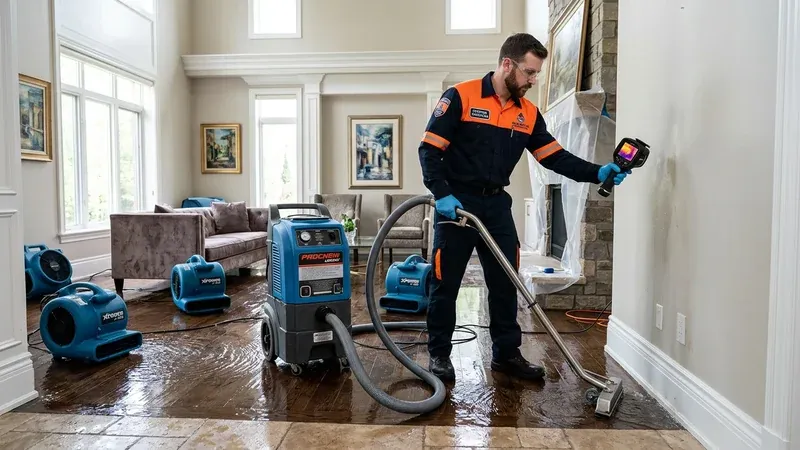
The Critical First Hour of Water Intrusion
A burst pressurized supply line, broken washing machine hose, or sudden foundation seepage can release hundreds of gallons of water into your living quarters within minutes. In a sudden indoor water emergency, the first sixty minutes dictate whether flooring, drywall, and structural timber can be preserved or must undergo costly demolition and replacement.
Step 1: Ensure Personal Safety and Electrical Isolation
Before stepping into standing water, you must eliminate electrocution hazards. If your main electrical panel is located in an unaffected, dry area, switch off the individual circuit breakers that supply electricity to submerged rooms. If the electrical service panel itself is in a flooded basement or damp utility room, do not attempt to navigate standing water. Contact your municipal electrical utility provider to execute an immediate exterior meter disconnect.
Step 2: Shut Down the Main Water Supply Valve
If the flooding stems from a domestic plumbing failure, immediately shut off your home's main water supply. The main shutoff is typically located near the water meter, along the foundation perimeter where the street main enters the building, or near the primary water heater. Turn the valve wheel or lever ninety degrees until water flow stops completely, then open lower-level exterior hose bibs to relieve residual line pressure.
Step 3: Document All Initial Water Boundaries and Damage
Before moving furniture or removing standing water, record timestamped photos and continuous video walkthroughs of every affected room. Capture water levels against baseboards, sagging ceiling plaster, soaked carpet lines, and damaged personal possessions. This unedited photographic log provides vital proof of loss for insurance claims adjusters before temporary mitigation alters the scene.
Step 4: Protect Valuables and Elevate Furniture
Wood stain from furniture legs and dye from area rugs quickly bleed into wet carpets, creating permanent staining. Slip small squares of aluminum foil or plastic food wrap beneath wooden chair and table legs to break capillary contact. Move electronics, paper files, and delicate upholstered fabrics to unaffected upper floors.
Step 5: Contact Professional Emergency Water Extraction
Household shop vacuums and residential fans lack the cubic airflow and lift capacity needed to pull water out of subflooring and cavity insulation. Calling our emergency dispatch desk connects you with certified restoration crews equipped with truck-mounted vacuum wands and low-grain refrigerant dehumidifiers to begin high-speed mitigation before microbial mold growth initiates.
Experiencing an Active Water Emergency?
Do not let water sit in your home or business. Call our nationwide dispatch desk to coordinate emergency water extraction and structural drying.
Call (855) 563-0161