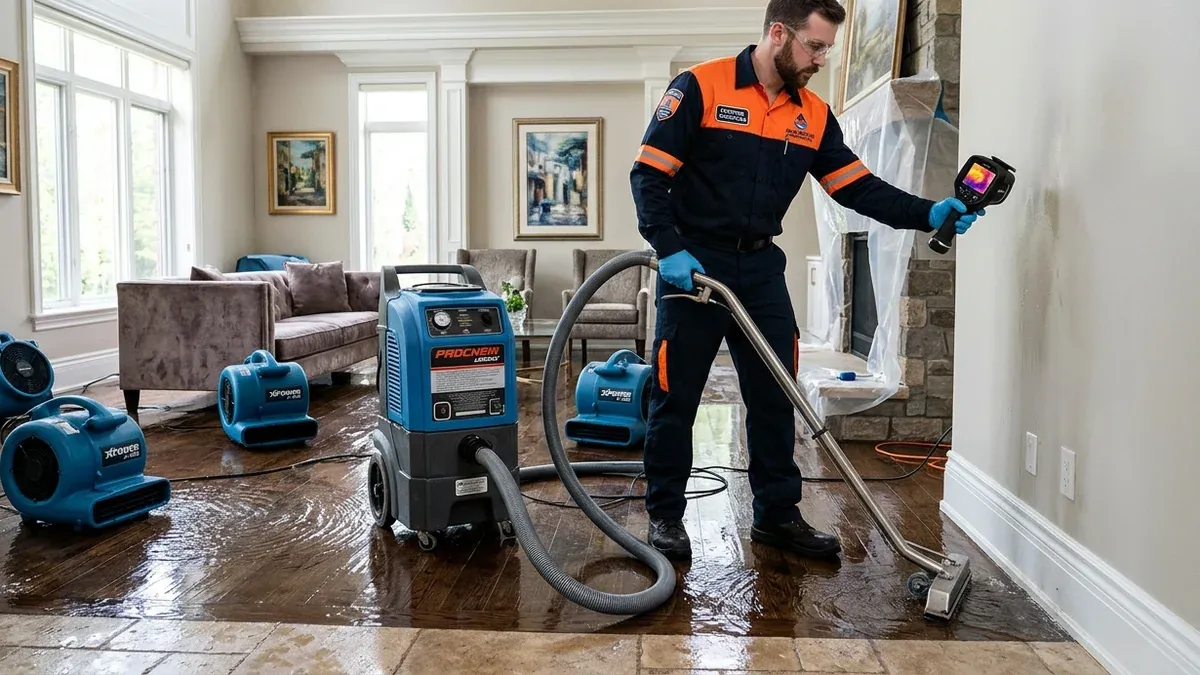
Basements face constant moisture pressure from surrounding soil. When heavy rainstorms hit or primary sump pumps fail during power outages, basements can fill with feet of water within hours. We connect you with local water damage specialists who quickly pump out standing water, remove ruined carpet padding, clean concrete slabs, and run commercial dehumidifiers to dry foundation walls before musty odors and mold take hold.
Technical Standards
Pumping Out and Drying Flooded Basements
Basements lack natural airflow and hold cool dampness. When heavy storms or failed sump pumps flood your basement, technicians pump out standing water, remove ruined carpet padding, and run industrial dehumidifiers to dry concrete floors and foundation walls thoroughly.
✓High-power submersible pumps for fast basement water extraction
✓Remediation of primary and battery-backup sump pump overflow events
✓Concrete slab pressure cleaning and efflorescence containment
✓Specialized low-temperature dehumidification for cooler basement spaces
✓Antimicrobial sanitation preventing musty basement odors and mold growth
Standard Restoration Workflow
1
Electrical and Sub-Grade Safety Audit
Checking for water depth near electrical outlets, appliances, and water heater pilot lights.
2
Heavy Water Extraction
Pumping standing water outside away from the foundation perimeter using heavy discharge hoses.
3
Content Pack-Out and Porous Material Stripping
Elevating salvageable contents and removing soaked drywall, trim, and ruined carpet padding.
4
Masonry Dehumidification and Air Scrubbing
Setting up commercial dehumidifiers and air scrubbers to dry porous concrete slabs and foundation walls.
Frequently Asked Questions Regarding Basement Flood Cleanup and Drying
The most common causes include primary sump pump failure during power blackouts, intense hydrostatic pressure cracking foundation walls, sewer line back-ups, and failed water heater storage tanks.
Basements typically feature cooler temperatures, high ambient soil moisture around foundation walls, and lack natural window ventilation. Low temperatures reduce natural evaporation rates, requiring specialized low-temperature dehumidifiers.
While pure concrete is inorganic and does not sustain mold growth on its own, dust, dirt, and organic residues on the slab readily support mold colonies when high humidity levels persist.
Efflorescence is a white, powdery mineral deposit left behind when water evaporates from porous concrete or brick. It signals that moisture has been pushed through masonry by hydrostatic pressure, leaving mineral salts on the surface.
If the floodwater was Category 2 or 3, or if water sat against the drywall for over 24 hours, the bottom two feet must be cut away to discard wet insulation and allow structural wall framing to dry thoroughly.
Battery-backup sump pumps automatically activate if utility grid power cuts out or if the primary pump fails under heavy load, providing vital emergency pumping capacity during violent thunderstorms.
Non-porous furniture made of solid wood, metal, or glass can usually be disinfected and saved. Upholstered items and mattresses saturated with contaminated basement runoff typically require professional disposal.
Crews remove damaged vapor barriers, pump standing water, install temporary commercial dehumidifiers, and lay fresh heavy-mil polyethylene liners across soil to seal out rising earth dampness.
Emergency Water Help
Basement Flood Cleanup and Drying
Speak with our dispatch desk to connect with an available independent restoration contractor for moisture inspection, water extraction, and structural drying.
Call our emergency dispatch desk to connect with an independent local contractor for basement flood cleanup and drying and straightforward project estimates.